


Tools and Approaches: Local Safety and Inclusion Solidarity Networks (LSISNs)
Related

February 04, 2026
Режим правосуб’єктності в Україні: системний збій у забезпеченні прав людей з інвалідністю

February 04, 2026
Ukraine’s Legal Capacity Regime: Failing People with Disabilities – Report (English Version)

November 13, 2025
Toronto – A Place to Call Our Own: EMPOWERING WOMEN TO TAKE ACTION FOR AFFORDABLE HOUSING

November 13, 2025
Primer on a New Disability Income Benefit
Six Key Elements for an Inclusive Labour Market
Despite research suggesting the positive benefits associated with the employment of people with developmental disabilities historically, this group of individuals has disproportionately low levels of job attainment. This research paper focuses on the positive outcomes of those who have employed individuals with developmental disabilities, as well as best practices that have been implemented, and explores policy conditions that can support the activation and scale of these effective methods for the employment of individuals with development disabilities.
Related
June 24, 2026
“Policy Regimes Inclusion and Accessibility Assessment (PRIAA) Application and Platform User Guide Part I

January 26, 2026
Failing at the Gateways to Legal Capacity: Assessing Equality for People with Disabilities in Canada’s Legal Capacity Regimes

November 13, 2025
Inclusive Violence Against Women Shelters for Older Women with Disabilities and Older Deaf Women: A Resource Guide by Springtide Resources

November 13, 2025
Trafficking & Indigenous Women with Disabilities – Fact Sheets
Toronto – A Place to Call Our Own: EMPOWERING WOMEN TO TAKE ACTION FOR AFFORDABLE HOUSING
This report outlines the results of research conducted through a collaborative initiative led by Riverdale Immigrant Women’s Centre, the Centre for Equality Rights in Accommodation and the Institute for Research and Development on Inclusion and Society, entitled: Toronto – A Place to Call Our Own: Empowering Women to Take Action for Affordable Housing. The initiative convened indigenous, refugee women and women with intellectual and psychosocial disabilities – including gender non-conforming people and trans women who identify as members of these populations – to identify and deepen the city of Toronto’s understanding of the diverse systemic barriers that result in these groups’ experiences of homelessness, unsafe housing and housing insecurity. This project aimed to provide a space for grassroots, front-line housing service providers, specific to these populations of women, to work with community-based organizations, the private sector and social housing advocacy efforts to develop a strategy to address the lack of access to affordable housing in Toronto, as well as identify what is needed to keep these populations of women housed.
Related
September 01, 2026
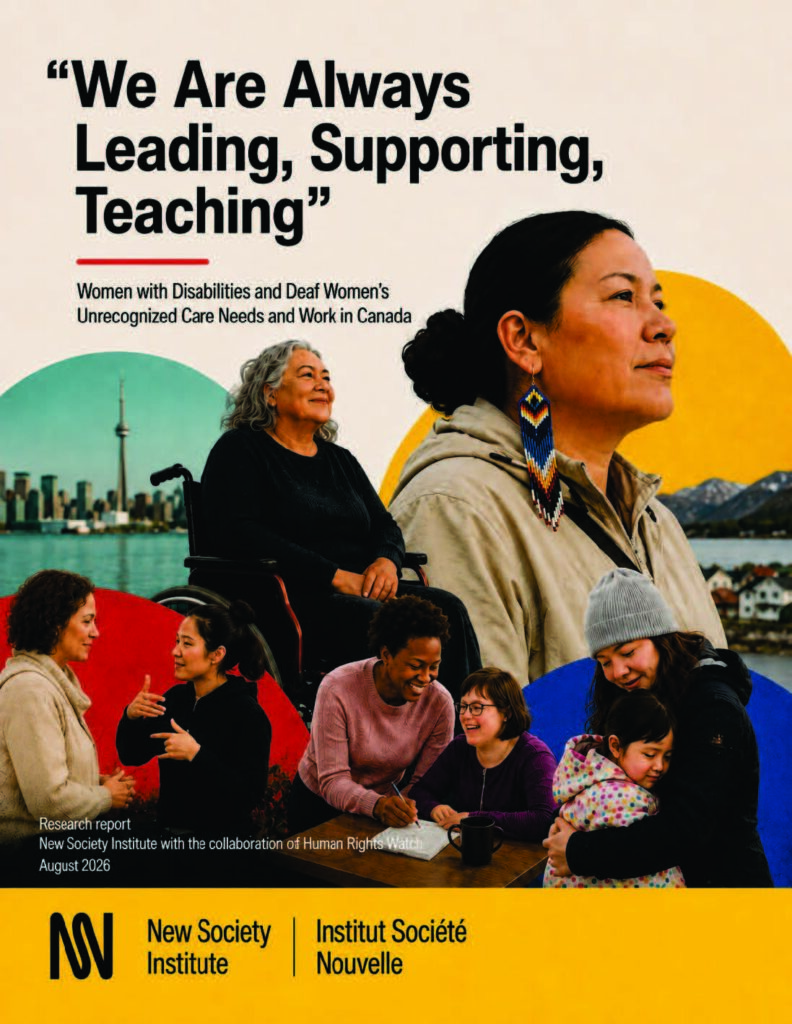
We Are Always Leading, Supporting, Teaching Women with Disabilities and Deaf Women’s Unrecognized Care Needs and Work in Canada
February 04, 2026
Режим правосуб’єктності в Україні: системний збій у забезпеченні прав людей з інвалідністю
February 04, 2026
Ukraine’s Legal Capacity Regime: Failing People with Disabilities – Report (English Version)
November 13, 2025
Primer on a New Disability Income Benefit
Inclusive Violence Against Women Shelters for Older Women with Disabilities and Older Deaf Women: A Resource Guide by Springtide Resources
This best practice guide was written by Doris Rajan, Director of Social Development at IRIS, for Springtide Resources. It offers information to shelter workers to learn about the nature of violence and barriers older women with disabilities and older Deaf women experience in accessing shelter services, in order to equip shelters to proactively address these issues within the context of their service provision. It is based on findings from a project implemented by Springtide Resources that set out to address the challenges in accessing Violence Against Women (VAW) shelters in Ontario for older Deaf women and older women with disabilities.
Related
June 24, 2026
“Policy Regimes Inclusion and Accessibility Assessment (PRIAA) Application and Platform User Guide Part I
January 26, 2026
Failing at the Gateways to Legal Capacity: Assessing Equality for People with Disabilities in Canada’s Legal Capacity Regimes

November 13, 2025
Six Key Elements for an Inclusive Labour Market
November 13, 2025
Trafficking & Indigenous Women with Disabilities – Fact Sheets
Primer on a New Disability Income Benefit
The 2020 Throne Speech announced the federal government’s plan to introduce a new disability income benefit modelled on the Guaranteed Income Supplement (GIS) for seniors. The primer scans the income support landscape in Canada and explores where and how the disability benefit might fit. It asks a series of questions about eligibility, benefit levels, administration and relationship to other income benefits. It provides a vocabulary for policy discussions with family, friends, neighbours, policy makers, elected representatives and the media about this landmark commitment.
Related
September 01, 2026
We Are Always Leading, Supporting, Teaching Women with Disabilities and Deaf Women’s Unrecognized Care Needs and Work in Canada
February 04, 2026
Режим правосуб’єктності в Україні: системний збій у забезпеченні прав людей з інвалідністю
February 04, 2026
Ukraine’s Legal Capacity Regime: Failing People with Disabilities – Report (English Version)
November 13, 2025
Toronto – A Place to Call Our Own: EMPOWERING WOMEN TO TAKE ACTION FOR AFFORDABLE HOUSING
Related
September 01, 2026
We Are Always Leading, Supporting, Teaching Women with Disabilities and Deaf Women’s Unrecognized Care Needs and Work in Canada
February 04, 2026
Режим правосуб’єктності в Україні: системний збій у забезпеченні прав людей з інвалідністю
February 04, 2026
Ukraine’s Legal Capacity Regime: Failing People with Disabilities – Report (English Version)
November 13, 2025
Toronto – A Place to Call Our Own: EMPOWERING WOMEN TO TAKE ACTION FOR AFFORDABLE HOUSING
Related
June 24, 2026
“Policy Regimes Inclusion and Accessibility Assessment (PRIAA) Application and Platform User Guide Part I
January 26, 2026
Failing at the Gateways to Legal Capacity: Assessing Equality for People with Disabilities in Canada’s Legal Capacity Regimes
November 13, 2025
Six Key Elements for an Inclusive Labour Market
November 13, 2025
Inclusive Violence Against Women Shelters for Older Women with Disabilities and Older Deaf Women: A Resource Guide by Springtide Resources
Serious Problems Experienced by Diverse People with Disabilities: Western Canada – A Qualitative Study
This report was written by IRIS’ Doris Rajan for Justice Canada during the onset of the pandemic in 2020. Justice Canada, in partnership with other federal government departments and Statistics Canada, conduct the general population Canadian Legal Problems Survey, however it was determined that there was a need to gather more information on certain marginalized groups, such as people with disabilities. The purpose of these qualitative reports is to learn more about the kinds of serious problems people with disabilities experience, the avenues people take to address these problems, the outcome, and the impact on their lives. Therefore, qualitative research projects were commissioned in four regions: Atlantic, Central, Quebec and Western Canada. Dr. Rajan’s research focused on the issues of diverse people with disabilities living in Western Canada, specifically, British Colombia, Alberta, Saskatchewan, and Manitoba.
Related
September 01, 2026
We Are Always Leading, Supporting, Teaching Women with Disabilities and Deaf Women’s Unrecognized Care Needs and Work in Canada
February 04, 2026
Режим правосуб’єктності в Україні: системний збій у забезпеченні прав людей з інвалідністю
February 04, 2026
Ukraine’s Legal Capacity Regime: Failing People with Disabilities – Report (English Version)
November 13, 2025
Toronto – A Place to Call Our Own: EMPOWERING WOMEN TO TAKE ACTION FOR AFFORDABLE HOUSING
Related
September 01, 2026
We Are Always Leading, Supporting, Teaching Women with Disabilities and Deaf Women’s Unrecognized Care Needs and Work in Canada
February 04, 2026
Режим правосуб’єктності в Україні: системний збій у забезпеченні прав людей з інвалідністю
February 04, 2026
Ukraine’s Legal Capacity Regime: Failing People with Disabilities – Report (English Version)
November 13, 2025
Toronto – A Place to Call Our Own: EMPOWERING WOMEN TO TAKE ACTION FOR AFFORDABLE HOUSING
Trafficking & Indigenous Women with Intellectual, Cognitive and Psychosocial Disabilities – report, 2023
The Trafficking & Indigenous Women with Intellectual, Cognitive and Psychosocial Disabilities: Promising Preventative Practices initiative seeks to learn more about the specificity of these experiences to develop and implement culturally and disability sensitive promising practices for potential community supporters and women and gender diverse people themselves.
The first step in developing promising practices that will advance knowledge and enhance empowerment supports for Indigenous women and gender diverse peoples with intellectual, cognitive, and psychosocial disabilities, is to learn more about:
The nature of trafficking experiences, risk factors, service barriers and supports needed for Indigenous women and gender diverse people with intellectual, cognitive, and psychosocial disabilities who may be vulnerable to trafficking.
This is the primary objective of the research component of this project. The information gleaned from the research process will be used to develop resources and community strategies that will advance knowledge on promising practices for this population.
Related
September 01, 2026
We Are Always Leading, Supporting, Teaching Women with Disabilities and Deaf Women’s Unrecognized Care Needs and Work in Canada
February 04, 2026
Режим правосуб’єктності в Україні: системний збій у забезпеченні прав людей з інвалідністю
February 04, 2026
Ukraine’s Legal Capacity Regime: Failing People with Disabilities – Report (English Version)
November 13, 2025