


Focused on the income security system in Canada, this policy primer sets out the elements of the current disability income system, the core principles that should guide reform, and the challenges linked to eligibility, policy coherence, adequacy and disincentives. It explains key concepts and provides the policy language that we hope will enable informed conversation and participation in the public discussions on the disability income system now under way.
Tools and Approaches: Local Safety and Inclusion Solidarity Networks (LSISNs)
Related
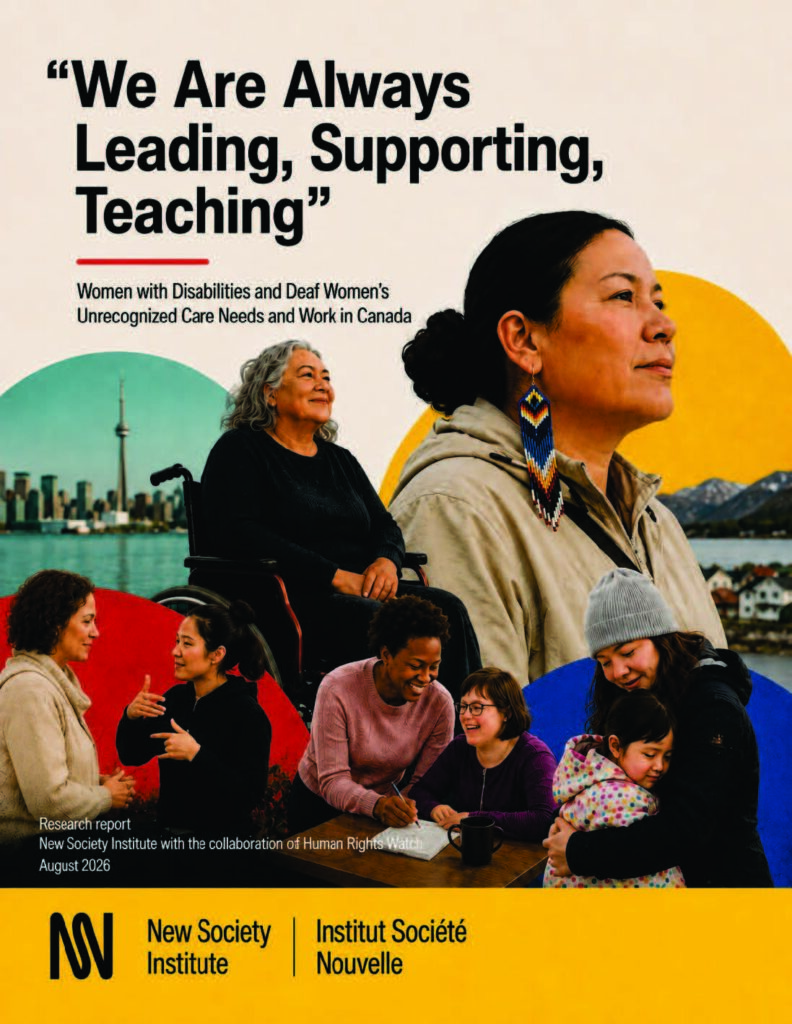
September 01, 2026
We Are Always Leading, Supporting, Teaching Women with Disabilities and Deaf Women’s Unrecognized Care Needs and Work in Canada

February 04, 2026
Режим правосуб’єктності в Україні: системний збій у забезпеченні прав людей з інвалідністю

February 04, 2026
Ukraine’s Legal Capacity Regime: Failing People with Disabilities – Report (English Version)

November 13, 2025
Toronto – A Place to Call Our Own: EMPOWERING WOMEN TO TAKE ACTION FOR AFFORDABLE HOUSING
Related

Related
September 01, 2026
We Are Always Leading, Supporting, Teaching Women with Disabilities and Deaf Women’s Unrecognized Care Needs and Work in Canada
February 04, 2026
Режим правосуб’єктності в Україні: системний збій у забезпеченні прав людей з інвалідністю
February 04, 2026
Ukraine’s Legal Capacity Regime: Failing People with Disabilities – Report (English Version)
November 13, 2025
Toronto – A Place to Call Our Own: EMPOWERING WOMEN TO TAKE ACTION FOR AFFORDABLE HOUSING
Roadmap for the National Action Plan on Violence Against Women and Gender-Based Violence
April 13, 2022
This report is the result of intense strategic engagement and analysis that took place over three months in early 2021 with anti-violence experts from across Canada representing 1000 person-years of experience and knowledge in the areas of violence against women (VAW) and gender-based violence (GBV).
IRIS was a contributor to this report.
Related
September 01, 2026
We Are Always Leading, Supporting, Teaching Women with Disabilities and Deaf Women’s Unrecognized Care Needs and Work in Canada
February 04, 2026
Режим правосуб’єктності в Україні: системний збій у забезпеченні прав людей з інвалідністю
February 04, 2026
Ukraine’s Legal Capacity Regime: Failing People with Disabilities – Report (English Version)
November 13, 2025
Toronto – A Place to Call Our Own: EMPOWERING WOMEN TO TAKE ACTION FOR AFFORDABLE HOUSING
Keeping Safe! Preventing and Responding to Violence against People with Disabilities and Deaf People
December 04, 2021
This guide is a result of many years of anti-violence applied research and community development initiatives that the Institute for Research and Development on Inclusion and Society (IRIS) has been involved with over the last three decades. Specifically, the information in this guide builds on access to justice resources developed in the late 1990s through to 2019; a project called Our Right to be Safe, led by the DisAbled Women’s Network Canada and Inclusion Canada (formerly the Canadian Association for Community Living); and, most recently, the Working Together: Combating Structural Violence against Indigenous, Racialized, Migrant Women and Women Labeled with Intellectual and Psychiatric Disabilities project.
The objective of this guide is to act as a resource for anti-violence service providers to learn about the nature and impact of, and barriers to, seeking help for diverse people with disabilities and Deaf people who experience and are at risk of violence, so that they can proactively address these issues within the context of their service provision and in the community as a whole.
Related
June 24, 2026
“Policy Regimes Inclusion and Accessibility Assessment (PRIAA) Application and Platform User Guide Part I

January 26, 2026
Failing at the Gateways to Legal Capacity: Assessing Equality for People with Disabilities in Canada’s Legal Capacity Regimes

November 13, 2025
Six Key Elements for an Inclusive Labour Market

November 13, 2025
Inclusive Violence Against Women Shelters for Older Women with Disabilities and Older Deaf Women: A Resource Guide by Springtide Resources
Help Wanted – Ending Sheltered Work in Canada
September 28, 2021
This is a report on research undertaken as part of People First of Canada’s initiative Help Wanted – Sheltered Workshops and the Steps to Ending Employment Segregation in Canada. The project aims to build awareness about the ongoing realities of sheltered work across Canada, create alternatives to sheltered work, and build capacity to shift away from this model to fully inclusive employment approaches.
The purpose of the research was to survey the state of sheltered work in Canada, identify promising practices for transitioning to inclusive employment, and point to policy and program directions to support this transition.
The research included a review of the literature, key informant interviews, case studies with providers who have transitioned from sheltered work to inclusive employment, and a survey of providers of employment-related support programs, including sheltered work.
Related
September 01, 2026
We Are Always Leading, Supporting, Teaching Women with Disabilities and Deaf Women’s Unrecognized Care Needs and Work in Canada
February 04, 2026
Режим правосуб’єктності в Україні: системний збій у забезпеченні прав людей з інвалідністю
February 04, 2026
Ukraine’s Legal Capacity Regime: Failing People with Disabilities – Report (English Version)
November 13, 2025
Toronto – A Place to Call Our Own: EMPOWERING WOMEN TO TAKE ACTION FOR AFFORDABLE HOUSING
Implementation Blueprint for Community-Based Pilots for Supporting Decision Making
September 03, 2021
This is a technical resource to assist project designers in developing the detailed programmatic framework for designing and implementing a community-based initiative for supporting decision making. It is intended to assist technical assistance teams, researchers, policy makers and other stakeholders understand the theory and concepts behind community-led initiatives for supporting decision making.
Related
June 24, 2026
“Policy Regimes Inclusion and Accessibility Assessment (PRIAA) Application and Platform User Guide Part I
January 26, 2026
Failing at the Gateways to Legal Capacity: Assessing Equality for People with Disabilities in Canada’s Legal Capacity Regimes
November 13, 2025
Six Key Elements for an Inclusive Labour Market
November 13, 2025
Inclusive Violence Against Women Shelters for Older Women with Disabilities and Older Deaf Women: A Resource Guide by Springtide Resources
The Equal Right to Decide – Tools for Community Change
September 03, 2021
IRIS has been working for some years to develop resources and strategies to advance the equal right to decide for people who live with an intellectual, cognitive or communication disability mental health issues. Many people who live these disabilities are denied the right to make basic decisions about their lives – about where they will live with, with whom, a health care treatment, or what they will do with their own money.
Denial of such a fundamental right has been called the ‘civil death’ of people with disabilities. It contributes to their status as non-citizens, unable to take their rightful place in their own lives, communities, and society.
The equal right to decide, or to exercise “legal capacity” without discrimination based on disability, is recognized in the UN Convention on the Rights of Persons with Disabilities (CRPD). Under the CRPD, governments must take steps to ensure this right is realized in people’s lives. This includes ensuring that people have access to the supports they may require for this purpose. One way to do this is by investing in community initiatives to arrange and deliver decision-making supports.
IRIS has developed some useful tools to assist communities in taking on this issue.
My Life My Decisions
My Life My Decisions is an introduction to the right to decide, and the key concepts of supports for decisions, supported decision-making arrangements, and the duty to accommodate a person. Designed to be provided online or in person, this course has information and exercises for participants to learn about this issue and to begin to design a community-led initiative.
Read moreCommunity-led Initiatives Supporting the Right to Decide – A Framework for Design and Implementation
This guide presents the core functions of community-based initiatives to support people in making decisions, presented in this document, provides a helpful framework to begin the dialogue in your community. The first step is to convene community organizations and advocates who want to partner in launching a local initiative for the right to decide.
Read moreCommunity-led Initiatives Supporting the Right to Decide – A Readiness Assessment Tool
This guide is designed to assist community organizations assess their readiness to implement strategies for supporting people in decision making. It looks at each of the ‘core functions’ for community-based initiatives in the Framework guide and asks about the enablers, barriers and strategies need to ensure effective capacity to deliver each function.
Read moreImplementation Blueprint for Community-Based Pilots for Supporting Decision Making
This is a technical resource to assist project designers in developing the detailed programmatic framework for designing and implementing a community-based initiative for supporting decision making. It is intended to assist technical assistance teams, researchers, policy makers and other stakeholders understand the theory and concepts behind community-led initiatives for supporting decision making.
Read moreWhy are people denied the equal right to decide?
These barriers are rooted in long standing societal perceptions, and deeply held cultural values that to be a full person, equally respected to make decisions about one’s life, and be trusted to enter legal relationships with others, one must be able to understand consequences of this or that option and communicate in ways that others can understand. These assumptions have been woven into laws going back to the early Roman period. Today, they are reflected in mental health laws and substitute decision making laws still on the books and denying people with disabilities the right to decide in countries around the world.
What’s the consequence?
These discriminatory societal norms and laws shape public policies determining whether people with disabilities can manage their own money, and authorizing denial of the right to decide – by government services, financial benefits workers, bank tellers, and doctors. These norms and laws also shape how people are seen – when they walk in a store to make a purchase and are denied the right to do so on the basis they are unable to enter a contract. Or, even within the context of their own family when it is assumed a person is unable to make decisions for themselves and must be taken care of instead.
Related
June 24, 2026
“Policy Regimes Inclusion and Accessibility Assessment (PRIAA) Application and Platform User Guide Part I
January 26, 2026
Failing at the Gateways to Legal Capacity: Assessing Equality for People with Disabilities in Canada’s Legal Capacity Regimes
November 13, 2025
Six Key Elements for an Inclusive Labour Market
November 13, 2025
Inclusive Violence Against Women Shelters for Older Women with Disabilities and Older Deaf Women: A Resource Guide by Springtide Resources
Community-led Initiatives Supporting the Right to Decide – A Readiness Assessment Tool
September 03, 2021
This guide is designed to assist community organizations assess their readiness to implement strategies for supporting people in decision making. It looks at each of the ‘core functions’ for community-based initiatives in the Framework guide and asks about the enablers, barriers and strategies need to ensure effective capacity to deliver each function.
Related
June 24, 2026
“Policy Regimes Inclusion and Accessibility Assessment (PRIAA) Application and Platform User Guide Part I
January 26, 2026
Failing at the Gateways to Legal Capacity: Assessing Equality for People with Disabilities in Canada’s Legal Capacity Regimes
November 13, 2025
Six Key Elements for an Inclusive Labour Market
November 13, 2025
Inclusive Violence Against Women Shelters for Older Women with Disabilities and Older Deaf Women: A Resource Guide by Springtide Resources
My Life, My Decisions – Course Overview
September 03, 2021
My Life, My Decisions is an introduction to the right to decide, and the key concepts of supports for decisions, supported decision-making arrangements, and the duty to accommodate a person. Designed to be provided online or in person, this course has information and exercises for participants to learn about this issue and to begin to design a community-led initiative.
Related
June 24, 2026
“Policy Regimes Inclusion and Accessibility Assessment (PRIAA) Application and Platform User Guide Part I
January 26, 2026
Failing at the Gateways to Legal Capacity: Assessing Equality for People with Disabilities in Canada’s Legal Capacity Regimes
November 13, 2025
Six Key Elements for an Inclusive Labour Market
November 13, 2025